When a person faces difficult life circumstances, it is often not enough simply to tell them where to turn for help. This is especially important when it comes to serious health problems, disability, loneliness, lost documents, financial hardship, or the need for constant care.
In such situations, case management becomes especially important.
Case management is individual support for a person or their family. A specialist helps identify needs, draw up an action plan and involve the necessary services, and makes sure the person receives the help they need.
Three cases completed within the project show that people's needs vary greatly and that help can be comprehensive.
Several real case-management stories from the project «Expanding access to home care and palliative care services in 7 communities of Ukraine through a coalition of CSOs — social service providers», supported by the «Askold and Dir» Fund, administered by ISAR «Ednannia» within the project «Strong Civil Society of Ukraine — a Driver of Reforms and Democracy», funded by Norway and Sweden.
🏠 Home help and care
One beneficiary, who lived alone and had difficulty with housekeeping and personal hygiene, was enrolled in the home-care unit. A social worker began visiting the client regularly, helping with cooking, household chores, and hygiene.
In another case, the home-care service provided support while the person's admission to a residential care facility was being arranged.
🏥 Access to medical care
Case management also helps solve practical difficulties in obtaining medical services.
This may mean registering with a family doctor, arranging a hospital visit, accompanying the person, transport, or coordination with other specialists.
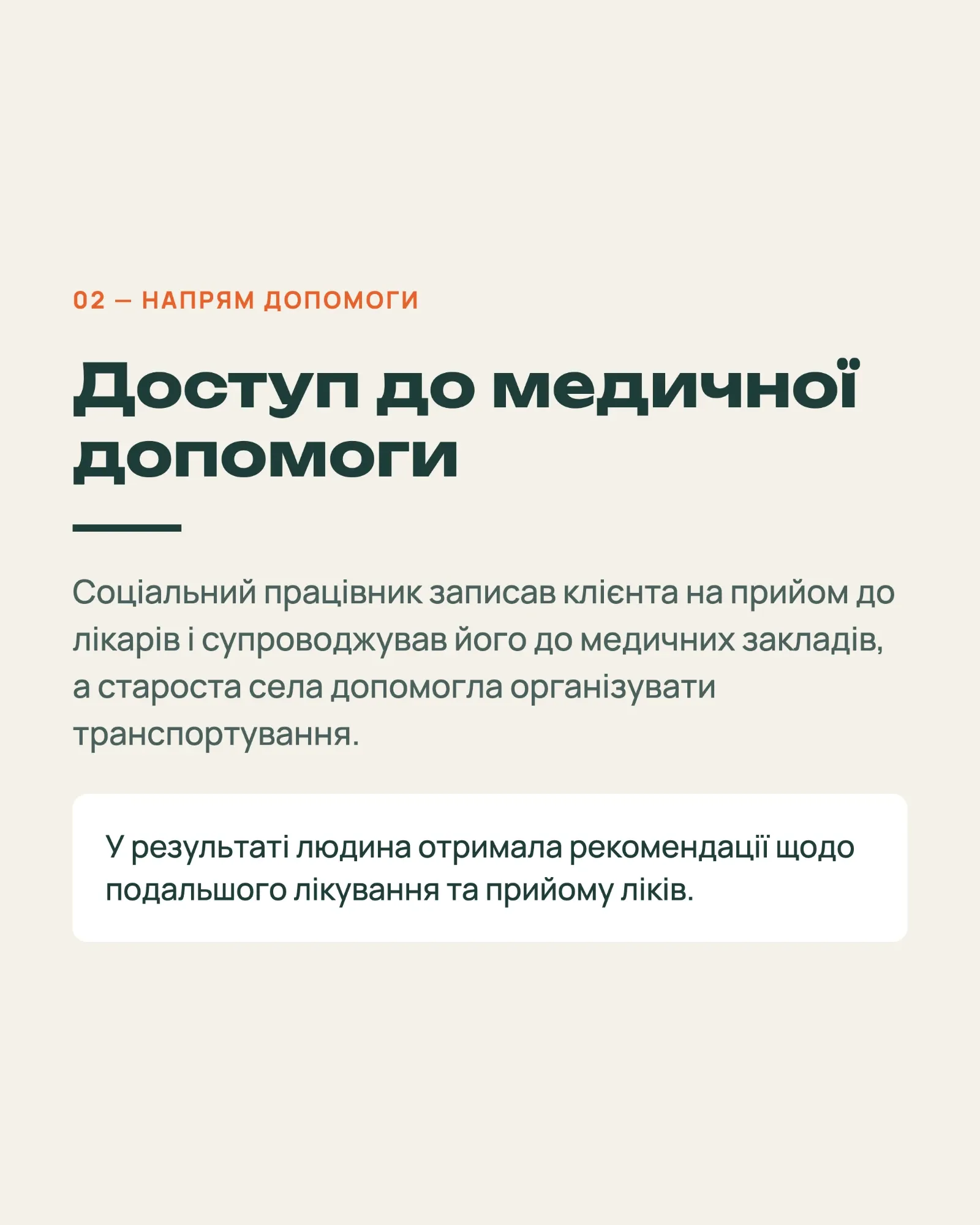
In one case, a social worker booked the client's appointments with doctors and accompanied him to medical facilities, while the village head helped arrange transport. As a result, the person received recommendations on further treatment and medication.
For a family with a child with a disability, access to a social taxi service was arranged for trips related to receiving medical care.
📄 Help with documents
Sometimes it is impossible to receive social or other assistance without the necessary documents.
In such cases, a case manager can help gather the required documents, make copies, prepare an application, find out how to obtain a service, or restore lost documents.
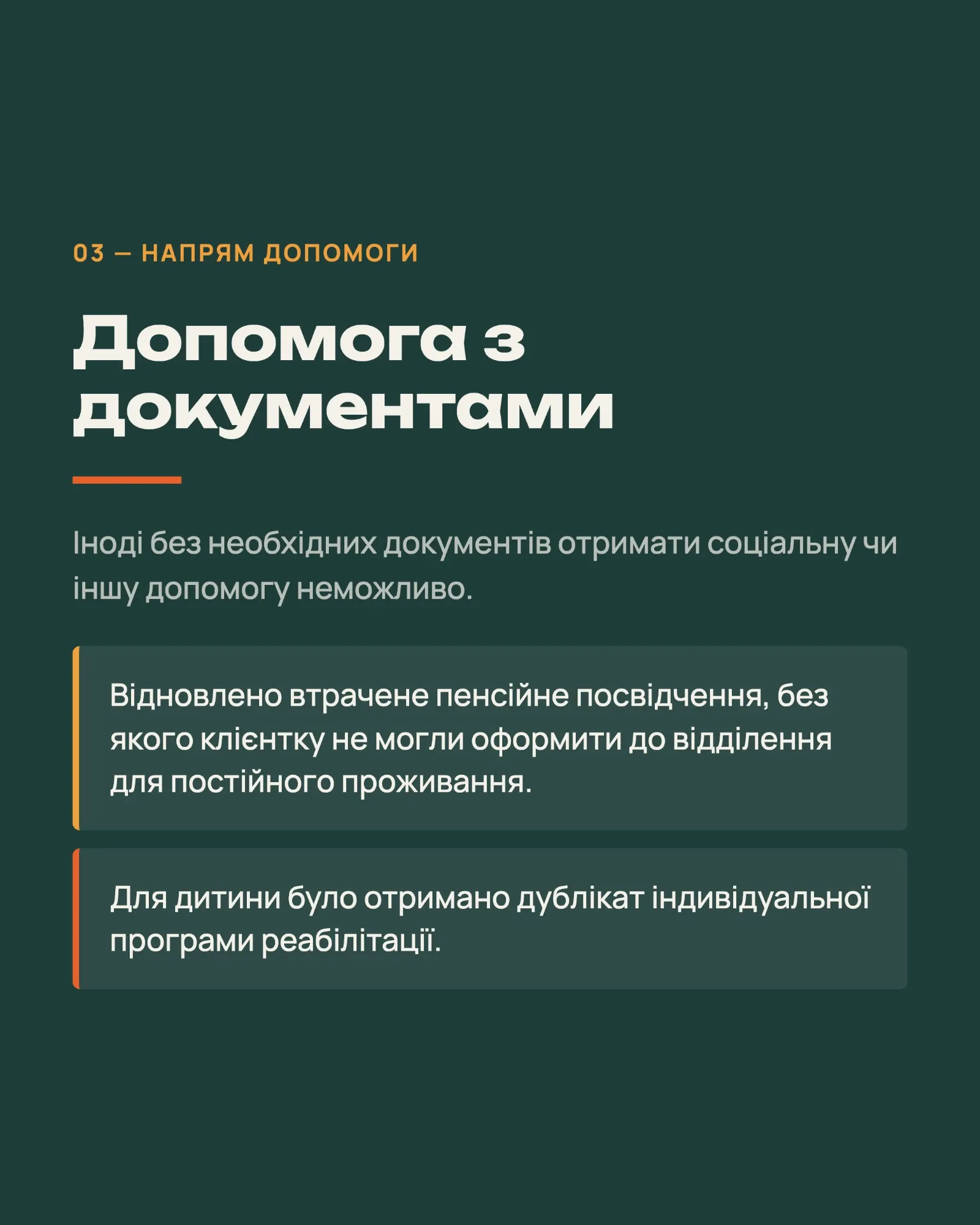
In one case, a lost pension certificate was restored — without it, the client could not be admitted to a residential care unit.
In another case, a duplicate of a child's individual rehabilitation programme was obtained.
💳 Material support
Case management also helps people access various material support programmes.
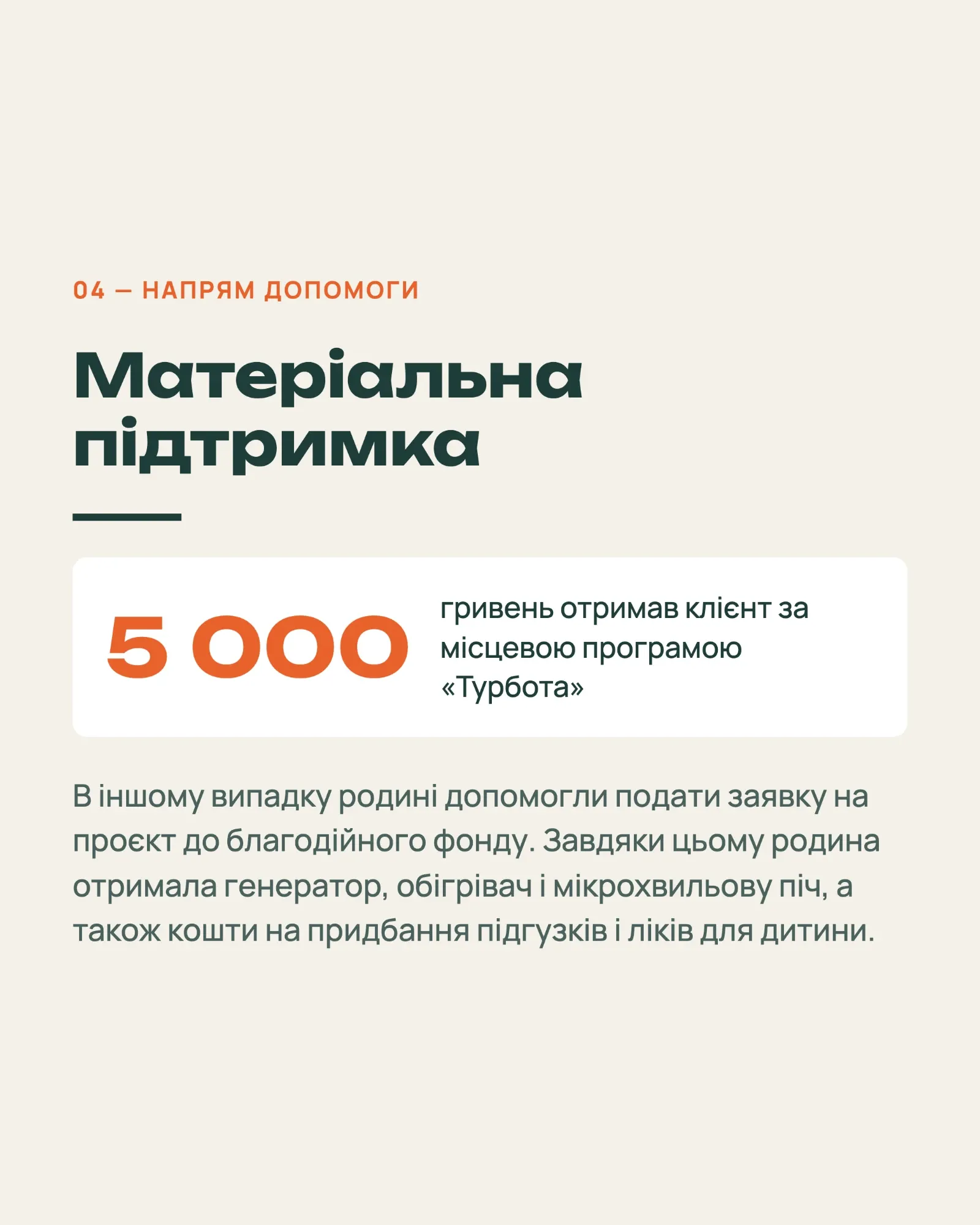
In particular, in one case the client was helped to prepare documents for financial assistance under the local «Turbota» programme. As a result, he received 5,000 hryvnias.
In another case, a family was helped to apply to a charitable foundation's project. Thanks to this, the family received a generator, a heater, and a microwave oven, as well as funds to buy diapers and medicine for the child.
🧴 Hygiene products and rehabilitation aids
A person's needs can be very specific — for example, diapers, hygiene products, technical or other rehabilitation aids.
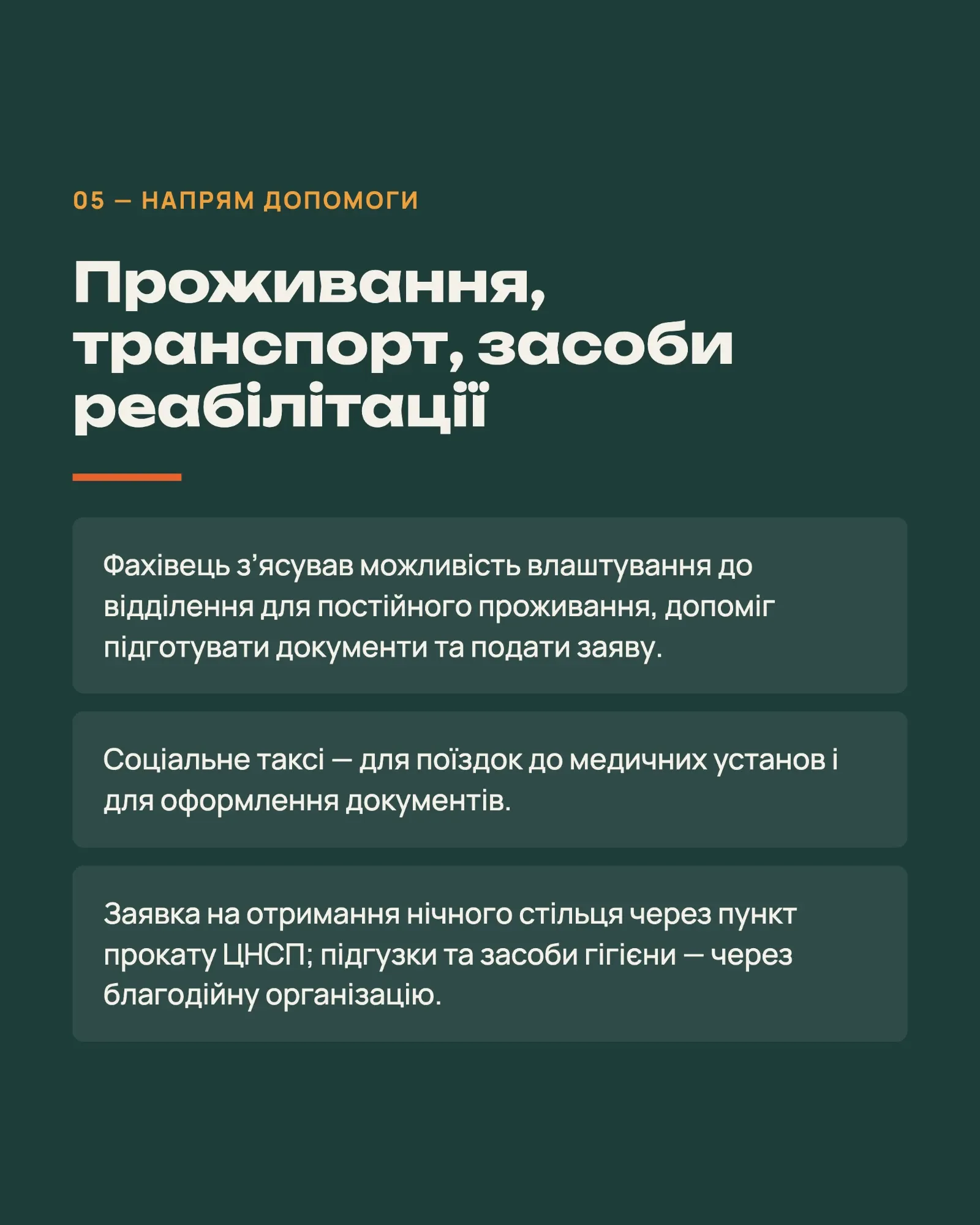
In one case, the client was helped to apply for a commode chair through the rental point of the Centre for Social Services (TsNSP). In another case, the case manager approached a charitable organisation to provide the client with diapers and hygiene products.
🏡 Placement in a residential care facility
If a person can no longer stay safe on their own, case management helps find the best option for further living arrangements.
In one case, a specialist looked into the possibility of placement in a residential care unit and helped prepare the documents and submit the application. While the paperwork was being processed, the client received home-care services. She was later admitted to the relevant unit.
🚕 Transport and access to services
For a person with limited mobility, even a trip to an institution can be a serious obstacle.
That is why a case manager can help arrange a social taxi or other necessary transport. In the project's cases, transport was used in particular for trips to medical facilities and for processing documents.
🤝 Support for family and caregivers
Case management is not only about the client. It is also important to support family members or caregivers who look after the person every day.
In the case of a family with a child with a disability, the help was aimed not only at material needs but also at making sure the family knew where and what kind of support they could get. After the support, the family was enrolled at the TsNSP, where they can now use the social taxi as well as the services of a hairdresser and a psychologist.
🌿 And most importantly — restoring a sense of support
The outcome of case management is measured not only by the documents or services obtained.
Reports note changes in emotional state, social functioning, quality of life, and access to services.
For example, after the support one of the clients became more willing to engage with specialists and fellow villagers, and his anxiety level decreased.
In another case, a person who had previously been isolated received constant care, safe living conditions, and the opportunity to communicate with other people.
For the family with a child with a disability, the result was not only improved living conditions but also a sense of community support and wider access to social services.
So, case management is focused on the person and their specific situation.
It is not only about «providing a service» but also about helping to find the right service, arrange it, organise cooperation between specialists, and make sure the help reaches the person who needs it.
Sometimes it is a social worker who comes to the home. Sometimes it is a doctor, a social taxi, documents, a rehabilitation aid, or material support. And often it is all of these together, united by one individual support plan.
This is the value of case management: to see the person behind the problem, identify their needs, and find real solutions together.