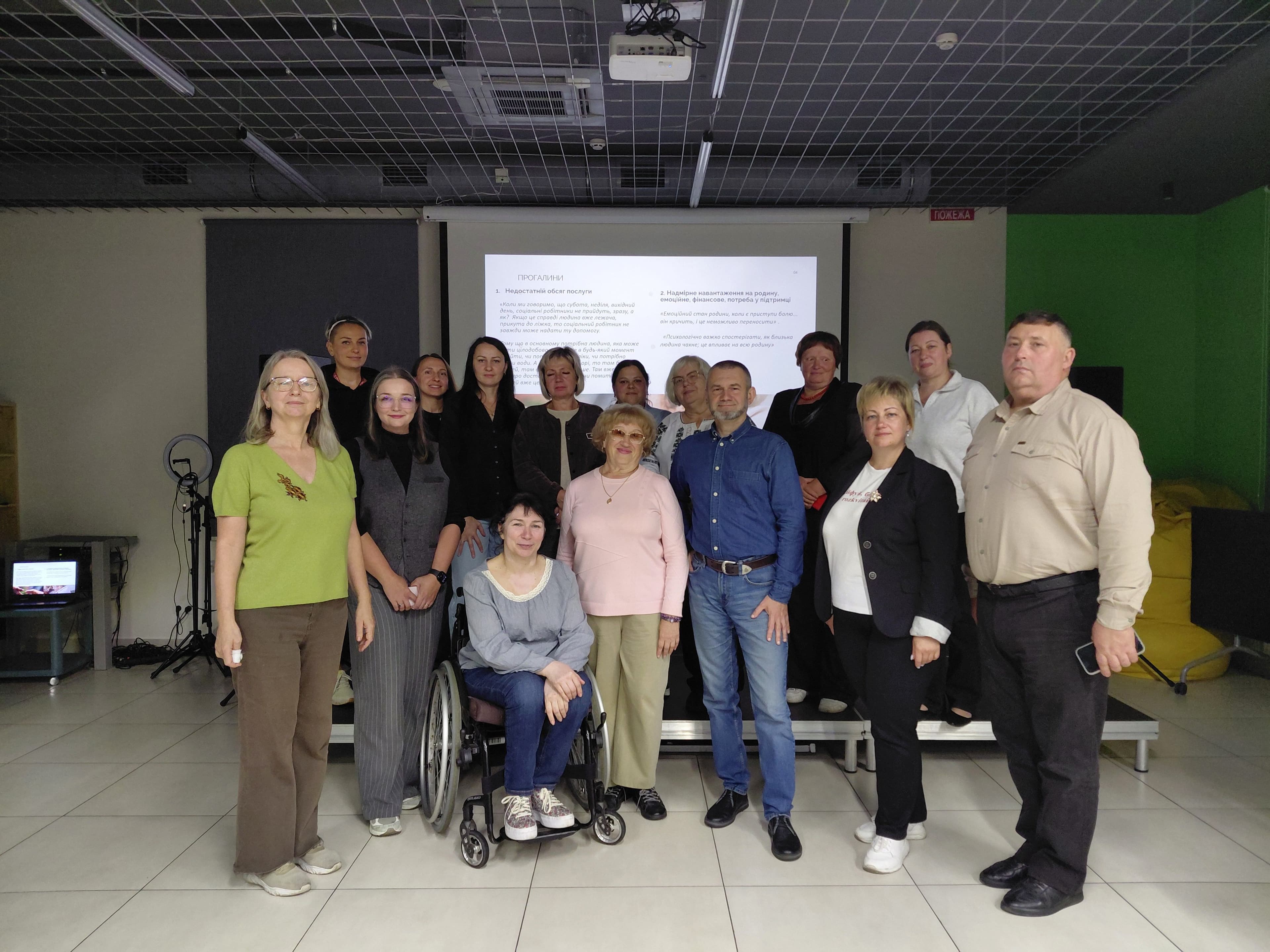
On 21 September, Vinnytsia hosted a round-table on «Developing and expanding access to home-care and palliative-care services in the Vinnytsia territorial community».
NGO «Parostok» organised the meeting within the project «Expanding access to home care and palliative care services in 7 Ukrainian communities by a coalition of CSOs — social-service providers». The project's goal is to ensure sustainable, high-quality access for community residents to home-care and palliative-care social services.
Representatives of civic organisations, municipal institutions, the social sector, and other bodies from Vinnytsia and the oblast gathered at the «Misto Zmistiv» Hub. They discussed not only statistics and services but also the real stories of people who need care every day: care recipients, their families, and specialists.
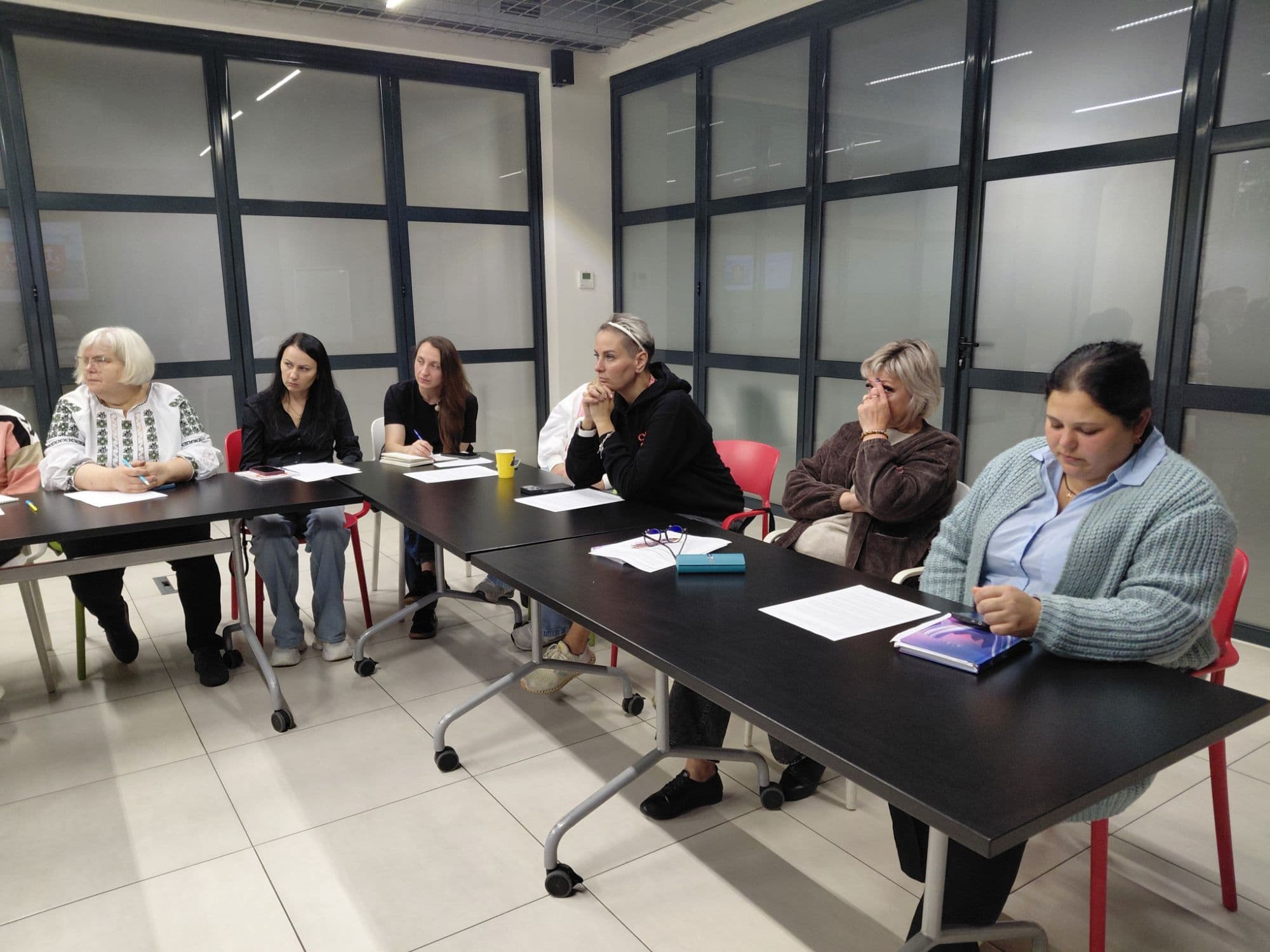
Advocacy expert Oksana Yatsiuk presented the results of the study and needs assessment of the Vinnytsia community.
The Vinnytsia community is the largest in the oblast. More than 415,000 people live here, of whom about 50,000 are internally displaced persons. Roughly one in four residents has reached pension age. This means that the need for social services, especially care services, will grow.
Today, institutions subordinate to the Department of Social Protection of Vinnytsia City Council provide home-care services, but palliative care is not yet available.
The existing services are not enough for people who need constant supervision. There is a need for residential care in the community, but there is not yet an institution that could provide it.
During the round-table, participants identified the main problems and possible ways to address them:
Support for specialists
Svitlana Ivashchenko of the «Open Hearts» Association shared experience of social procurement and stressed the importance of supervision for workers who provide palliative care. Such support helps specialists prevent professional burnout.
Professional burnout among social workers
Liliia Khrystianko and Valentyna Shumyhora, specialists of the Vinnytsia Territorial Centre for Social Services, said that cases of burnout among social workers have become more frequent. The centre's clients include people with palliative diagnoses, and the available psychological support for workers is not enough to reach everyone.
Spiritual support
Serhii Yamkovenko, head of NGO «Alliance Ukraine–Croatia» and chaplain of the Gideons community, spoke about the support chaplains can provide and offered cooperation to civic and municipal organisations.
Residential care
Representatives of the Regional Residential Home for Persons with Disabilities and Older Persons described the institution's work. The home's director, Serhii Yakubovskyi, announced plans to open a day-care unit operating from 9:00 to 17:00. Oksana Oryshchuk, head of NGO «Nezalezhnist», stressed the need for residential palliative care in the community.
Support for families
Psychologist and Vinnytsia Pedagogical University lecturer Alona Nastoiashcha highlighted the importance of support groups for relatives of people who need care.
Particular difficulties of IDP families
Nataliia Korchak of NGO «Pravopolis» described situations in which IDP families simultaneously face searching for housing, the need to care for older relatives, and the need to work. The gender dimension of care was discussed separately — when it is the woman who is expected to leave her job to care for a relative.
Overcoming stigma
Participants also discussed prejudices about residential care. The experience of visitors to NGO «Parostok»'s Humanitarian Hub shows that older people increasingly consider a residential home themselves as one possible option for future care, rather than something negative or shameful.
Knowledge and skills for families
Oksana Poida, head of the Vinnytsia city branch of the Union of Ukrainian Women, shared her personal experience of caring for her mother. In her words, families often lack accessible information and practical skills. Care training and clear information materials could be significant support for people caring for loved ones.
Prevention and information
Lesia Koniaha of NGO «Dia-Dity» stressed the importance of information work, particularly about complications of diabetes, which can lead to severe conditions.
Psychological help
Maryna Makhnytska and Olha Oliinyk, specialists of the «Skhid SOS» Charitable Foundation, spoke about opportunities to receive psychological help, including for social workers.
Participants emphasised the need for a clear algorithm by which a person or their family can seek help. This could be a roadmap for people with palliative diagnoses, information materials, or short videos.
A person and their family must know that help exists, where to turn, and which services are available. This is especially important when it is hard to figure things out on one's own.
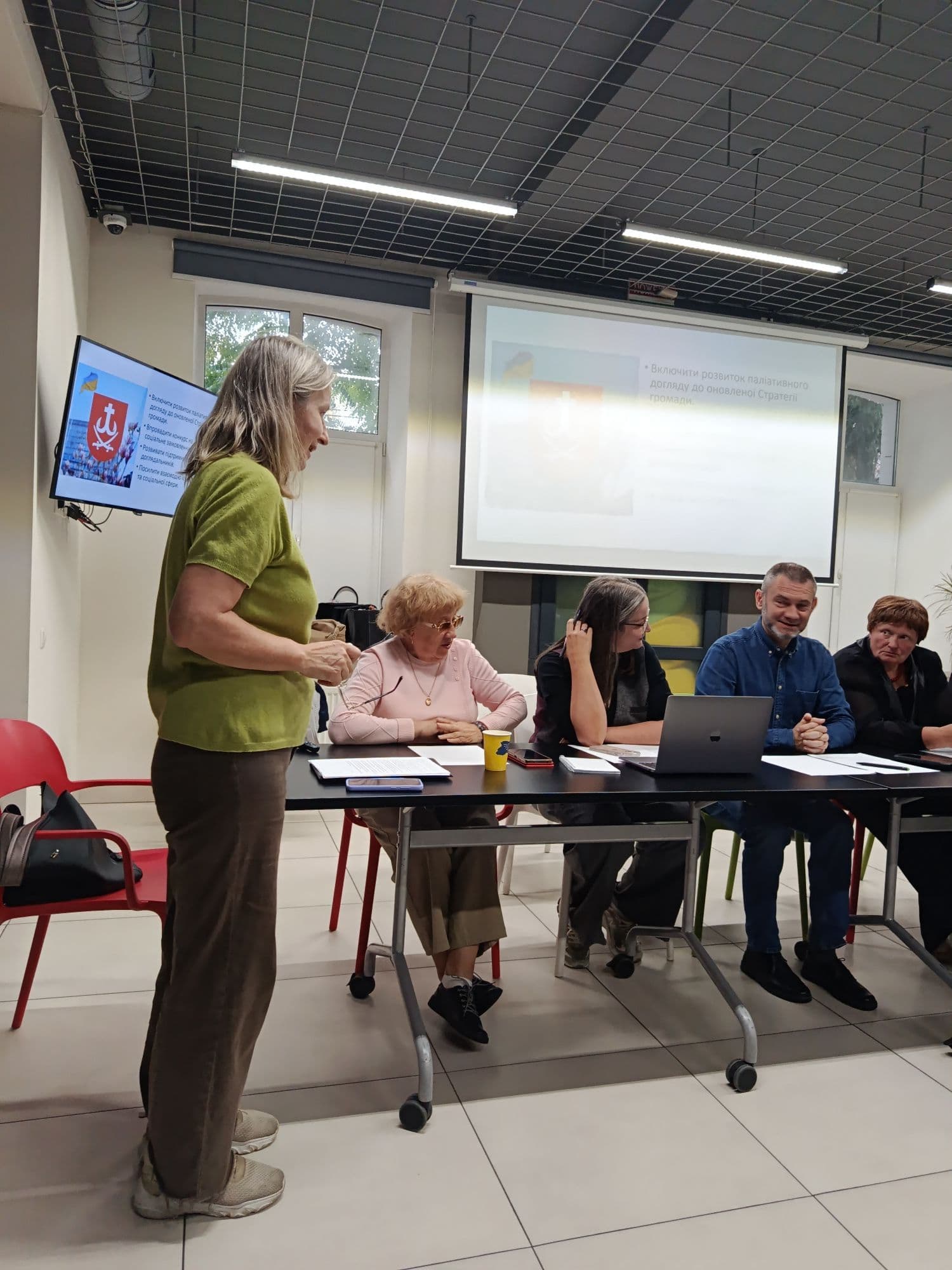
Following the round-table, participants adopted a resolution.
Among the proposed steps:
- to approach the authorities about including palliative care among the basic social services;
- to propose that Vinnytsia city authorities introduce a palliative-care service in the community;
- to consider establishing a residential palliative-care unit;
- to strengthen information and psychological support for people who need care, their families, and specialists.
We believe that palliative care in Ukraine should not be a formality but a real service that helps a person live with dignity, receive the support they need, and not be left alone in a difficult situation.
The round-table took place within the project «Expanding access to home care and palliative care services in 7 Ukrainian communities by a coalition of CSOs — social-service providers» with the support of the Askold and Dir Fund, administered by ISAR Ednannia within the project «Strong Civil Society of Ukraine — Driver of Reforms and Democracy» with the funding of Norway and Sweden.